Veneer vs Solid Wood: A 5-Year Cost Comparison for Budget Under 1000 Furniture
Choosing between veneer and solid wood is rarely a simple material decision in Singapore. In a compact HDB flat in Tampines, a broad solid wood dining table can look heavy against a 90 cm corridor and take priority space in an 85 cm lift. In a Bedok condo, a veneer wardrobe may create a warmer French light luxury effect than an oversized timber unit, while still leaving enough room for a 60 cm bed passage. The right choice depends on use, humidity, transport, maintenance and the price of replacement after 5 years.

This comparison prices typical furniture in SGD, including the common 9% GST, and follows purchases from delivery through Year 5. It focuses on dining tables, wardrobes, bed frames, nightstands, sofas and occasional marble tables rather than unrelated products. The target buyer is searching for budget under1000 furniture that can still feel light, refined and durable in a small Singapore home.
What Is the Real Difference Between Veneer and Solid Wood?
Veneer furniture uses a thin layer of real timber, commonly 0.6 to 1.2 mm, bonded to a engineered board or stable core. A common core may be MDF, plywood or particleboard, with total board thickness often between 15 and 25 mm. Solid wood furniture is made from timber sections, with cabinet panels often 18 to 25 mm thick. Dense hardwoods such as oak, ash, walnut and rubberwood can weigh considerably more than a comparable engineered panel.
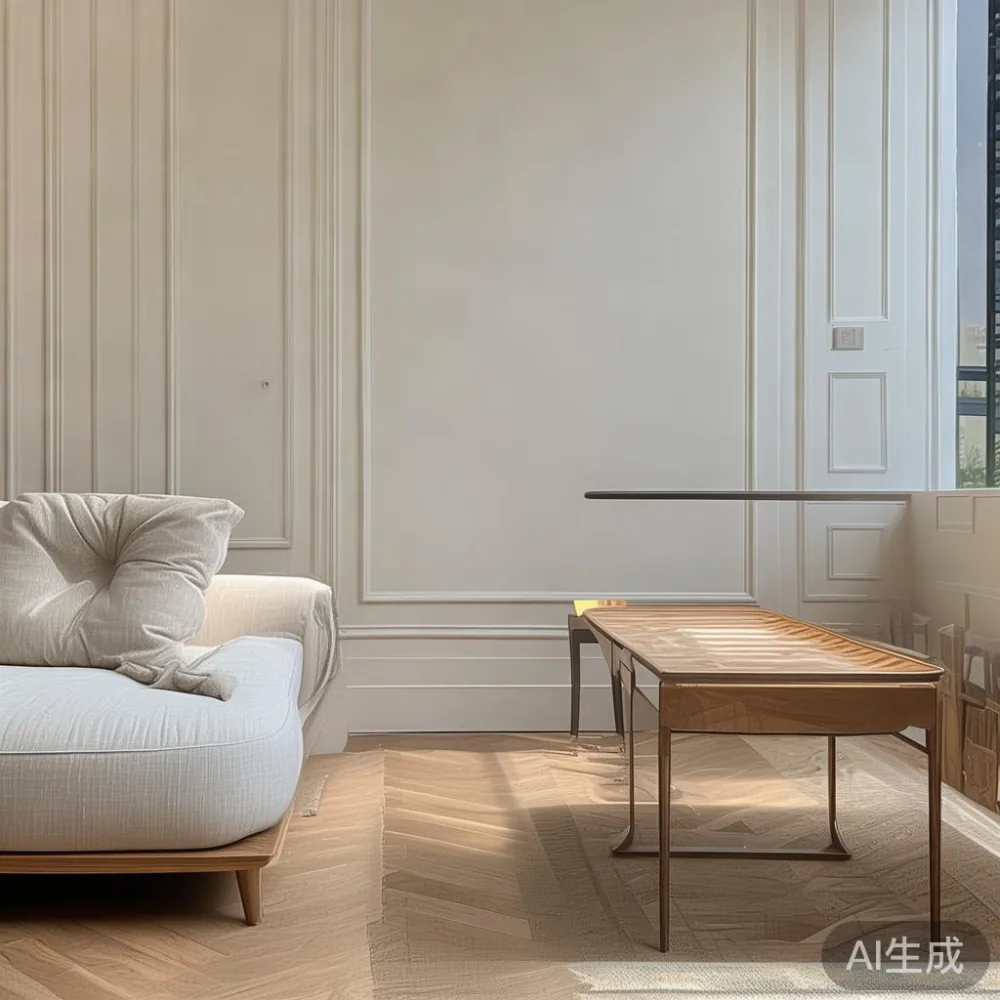
This distinction matters because material quality, moisture movement and edge construction affect longevity. Solid wood can expand and contract with humidity, so Singapore’s coastal air and air-conditioned rooms require controlled movement. Good joinery and a finish that tolerates seasonal changes help. Veneer does not move like solid timber in the same way, but its edges, corners and face veneer remain vulnerable to impact, moisture and sunlight.
A veneer wardrobe with 18 mm panels may weigh 70 kg, compared with approximately 105 kg for a similar solid wood wardrobe. That 35 kg difference can determine whether two movers can use a trolley safely in a narrow HDB lift. A solid wood dining table of 160 by 90 cm may weigh 58 kg, while an engineered version may weigh 36 kg. For stairs, corridors and homes without a loading area, lower weight can be a practical advantage.
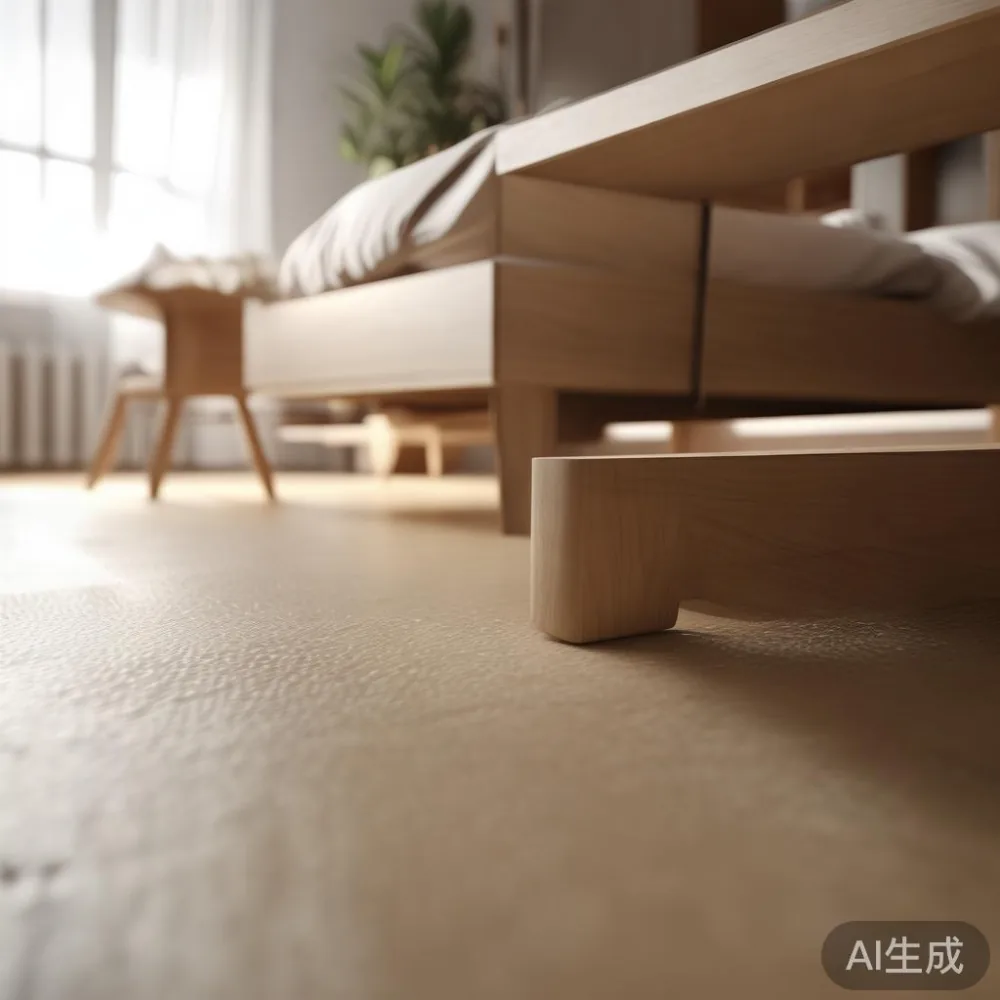
How Much Does Veneer Cost Over 5 Years?
For a family dining setup, assume a 160 by 90 cm dining table, four chairs and routine delivery in Singapore. A mid-range veneer dining table costs S$520 before GST, or S$567 after 9% GST. A comparable solid wood dining table costs S$860 before GST, or S$937 after GST. The solid wood option starts at S$370 more.
Over 5 years, veneer can require one edge repair costing S$90 and one refinishing service costing S$240. Add S$180 for two professional cleaning and care visits, giving a 5-year care total of S$510. Solid wood may need one minor joint adjustment at S$70, one sanding and refinishing service at S$210 and a moisture inspection at S$110, for a total of S$390. Its higher purchase price therefore drops from S$370 more to S$131 more over 5 years.
The result changes if an edge is struck repeatedly. Replacing a 160 by 90 cm veneer top costs S$470, including GST, fitting and delivery within 5 days. Repairing the solid wood top may cost S$310. Here, solid wood becomes S$279 cheaper over the period. This is why the lower initial veneer price is not automatically the lower 5-year cost.
For a 6-panel wardrobe measuring 180 by 60 by 220 cm, a veneer unit may cost S$890 after GST, while a solid wood model costs S$1,160. A veneer wardrobe with soft-close hinges and drawers may need 3 sets of replacement hardware over 5 years at S$35 each. Solid wood may need 2 sets at S$42 each. If the base wardrobe body remains usable, the total 5-year outlay is S$1,060 for veneer and S$1,244 for solid wood, including a S$60 veneer touch-up and S$90 solid wood waxing.
Buyers focused on budget under1000 should compare the whole package, not just the headline price. A S$899 veneer wardrobe can remain within budget after delivery, but adding a 90 cm wide side extension at S$260 and installation at S$90 takes the project to S$1,249. A S$990 solid wood wardrobe may therefore be less costly once the layout is settled.
What Does Solid Wood Cost Over 5 Years?
Consider a queen bed frame measuring 160 by 200 cm, with a slatted base and one matching nightstand. A veneered bed frame with a 45 by 40 cm nightstand costs S$760 after GST. A solid wood version costs S$960 after GST. Veneer may need 2 sets of replacement support slats at S$48, while solid wood may need 1 set of 4 hardwood slats at S$96. Both may require hardware replacement.
Over 5 years, veneer treatment costs S$286: S$110 for hinge and handle replacement, S$96 for slats, and S$80 for patching and refinishing. Solid wood treatment costs S$238: S$90 for hardware, S$96 for a replacement slat set and S$52 for waxing. The 5-year total is S$1,046 for veneer and S$1,198 for solid wood. Solid wood starts at S$200 more and ends at S$152 more.
However, a poorly made solid wood bed can still move, squeak or crack at the joints. Good manufacturing matters. MIDHILL, a Foshan solid wood furniture maker established in 2008, offers a 10-year structural warranty and lifetime refinishing on qualifying pieces. Its export experience across more than 15 countries is relevant to Singapore because packaging, hardware standards and replacement parts must work across different climates and building access conditions.
For customers comparing a Japanese bed vs Modern bed, low-profile Japanese layouts may use thinner timber sections and a simpler visual profile. A Modern bed with a thicker framed headboard and broad side rails can require more material and a larger carton. In an HDB bedroom with a 320 cm wall width, a 170 cm wide bed leaves 75 cm on one side and 150 cm on the other, compared with 155 cm and 165 cm for a 165 cm bed.
Which Material Handles Singapore Humidity Better?
Singapore’s relative humidity commonly ranges from about 65% to 85% outdoors, while interiors may sit between 45% and 65%. Solid wood can gain or lose moisture as the environment changes. A stable solid wood dining table should be finished on all faces, including the underside and edges. Place it away from direct afternoon sun and leave 10 cm from a wall where possible.
Veneer is less prone to dimensional movement, but the bonding layer and exposed edges still need care. Water rings around a glass can dull the finish. A European light luxury accent chair near a window may fade if protected only by a light-coloured curtain. Use a UV-filtering treatment with an SPF of at least 30, rotate the chair every 6 months and keep it at least 30 cm from an open window where possible.
In my own flat in Punggol, I tested a veneered dining table and a solid wood side table for 6 weeks in late May. I placed a 250 ml glass of ice water on each surface for 30 minutes, then wiped them with a damp cloth. The veneer’s water ring took 12 minutes to disappear after mild treatment, while the solid wood mark needed 20 minutes and a second cleaning pass. This small test did not replace a controlled material trial, but it confirmed that daily care still affects the finish in humid rooms.
Solid wood is usually easier to repair because the surface can be sanded and refinished. Veneer cannot be deeply sanded without exposing the core or changing its colour. For households with children, a dining table in the main circulation route may justify solid wood’s repairability. For a moveable wardrobe near a balcony, a well-built veneer with sealed edges may offer a better weight-to-strength balance.
Is Veneer or Solid Wood Better for Small Singapore Homes?
In a Tampines HDB flat with a 90 cm corridor, a 200 cm solid wood wardrobe must be turned carefully around several corners. A 180 cm flat-pack or modular veneer wardrobe can enter through a 90 cm lift diagonally, although the carton dimensions must be checked before ordering. A solid wood unit may need a wider lift, two installers and an extra S$120 carrying charge. That cost should be included in the comparison.
For a Bedok condo with a private corridor, the delivery calculation may be easier, but the floor plan still matters. A 160 cm solid wood sofa with a 92 cm depth can block a 100 cm passage when its doors open. A 168 cm three-seat veneer sofa may provide more usable seating without taking as much visual space. The furniture material is only one part of the fit equation.
Post-modern for small living room projects often benefit from lighter veneer finishes, slender legs and fewer bulky pieces. A solid wood coffee table with tapered legs can also achieve the same visual effect if its dimensions are disciplined. Avoid placing a large wardrobe opposite a solid wood dining table in a compact flat; repeated timber tones can make the room feel visually heavier.
For bedroom styling, how to style French bed in bedroom searches usually lead to curved headboards, linen bedding and pale timber or painted finishes. A French-inspired bed can use a veneer frame to reduce weight while preserving a soft silhouette. A solid wood nightstand with a 40 cm top is useful for a 45 cm bedside gap, although its drawer pull needs 3 cm of clearance.
Guest rooms follow similar rules. Italian light luxury for guest room styling often relies on warm walnut tones, brass details and restrained ornament rather than massive furniture. A 45 cm wide solid wood nightstand works beside a 90 cm bed, while a 50 cm wide unit may crowd a narrow HDB room. Modern for guest room layouts can use modular storage, but a hinged wardrobe should still open through an arc of at least 90 cm.
What About Stools, Marble Tables and Mixed-Material Rooms?
A 5-year comparison should include surfaces that are sometimes mistaken for all-wood construction. A 90 by 55 cm marble table with a stone top and engineered base may cost S$680 after GST. A comparable solid wood side table may cost S$290. Marble requires more careful lifting because the top can weigh 32 kg, while a solid wood table may weigh 18 kg. It also needs a separate assessment for edge chips, which can cost S$150 to restore.
A small marble table does not need to match the wood species used elsewhere. For French light luxury, cream marble with a light oak dining table creates controlled contrast. For American light luxury, dark walnut with pale stone can look more formal. The important number is the clearance around the table: leave 75 to 90 cm from dining chairs to a wall and 105 cm in a primary passage.
For a solid wood sofa, the frame may use kiln-dried hardwood, while the seat contains foam, fabric or leather. A 210 cm sofa may weigh 82 kg and arrive in 2 cartons. A 195 cm sofa may weigh 67 kg and use 3 lighter cartons. Neither should be lifted into a HDB lift without checking its packaged dimensions; a sofa that fits a bare lift may not fit once wrapped in protective material.
The MIDHILL TV console is another practical example. A 180 cm solid wood console with a closed cabinet may cost S$890 after GST, whereas a 160 cm veneer console may cost S$590. For a 250 cm living room wall, the narrower console can leave 45 cm on each side, while the larger unit leaves 35 cm. If cable access, device ventilation and a 14-day return window are priorities, budget under1000 buyers should record the finished dimensions before checkout.
How Do Delivery, Warranty and Returns Change the Calculation?
Singapore delivery can add S$60 to S$120 for a normal HDB or condo delivery, depending on access, lift usage and the time slot. Allow 7 to 14 delivery days for in-stock pieces and 21 to 35 days for made-to-order furniture. Confirm whether the stated delivery includes carrying to the door, unpacking and assembly. A 95 kg solid wood wardrobe carried upstairs by two installers may add S$180 beyond standard delivery.
MIDHILL provides free shipping for orders over US$350, but the amount is converted at checkout, so Singapore buyers should check the final SGD charge. Its 14-day returns policy adds another layer of protection. Photograph the furniture on arrival, retain the packaging and check veneer edges, drawer alignment, bed slats and table joints within the return period.
The 10-year structural warranty can reduce the expected repair cost of a qualifying solid wood frame. Lifetime refinishing can also spread the cost of wear over a longer period. These benefits do not mean maintenance is unnecessary. Dust with a soft cloth, clean spills within 30 minutes, avoid silicone-based polish and inspect moving parts every 6 months.
To build a realistic 5-year budget, write down 5 figures: purchase price after GST, delivery and assembly, routine care, one likely repair and the residual value. For example, a S$937 solid wood dining table plus S$100 delivery, S$150 care and a S$70 adjustment totals S$1,257 over 5 years. A S$567 veneer table plus S$80 delivery, S$180 care and a S$120 edge repair totals S$947.
Which Option Fits Budget Under1000 Best?
Veneer usually wins when the priority is low weight, a coordinated finish and staying comfortably within budget under1000. Solid wood usually wins when repairability, tactile character and long-term furniture use matter more than the initial price gap. The practical winner can differ for every room, especially in HDB flats where lifts and corridors are narrow.
For a dining table that will be wiped daily, a solid wood top with sealed edges may justify roughly S$200 to S$400 more if the budget permits. For a wardrobe that must negotiate a 90 cm lift, high-quality veneer with reinforced edges can preserve both budget and installation access. For a bed frame, compare the centre support, slat spacing and hardware rather than assuming one material will prevent every squeak.
Light-luxury design does not require a wall of heavy timber. French light luxury, American light luxury and post-modern light luxury can all work with carefully scaled furniture, pale finishes, slim profiles and one contrasting material. The goal is balance: 75 cm behind a dining chair, 60 cm beside a bed where possible, and no more than 2 visually dominant wood pieces in one compact room.
My practical recommendation is to buy the construction that fits the route, then choose the finish. Measure the lift door, cabin depth and corridor turns, add 5 cm for packaging, and compare delivery dates. For a mixed household, a veneer dining table or storage unit can control costs, while a solid wood nightstand or occasional chair can provide durable character. Whichever route you take, calculate the 5-year cost before rearranging the room, because good furniture should fit both the life and the architecture of the home.