What Actually Drives the Price of Solid Wood Furniture in Singapore (and How to Stay Budget Under 1000 SGD)
I still remember standing in a Tampines HDB lift last month, watching two delivery men wrestle a flat-pack wardrobe through a 90 cm door. One of them muttered, "这个板太轻了, not real wood." He was right. The board was hollow, the surface printed, and the customer was paying delivery for furniture that would probably not survive the next move to Punggol. That same afternoon I visited a showroom in Bedok where a solid wood dining table was SGD 980 and a marble coffee table was SGD 1,150, and the difference between them and the lift-flat rand was visible, heavy, and obvious.
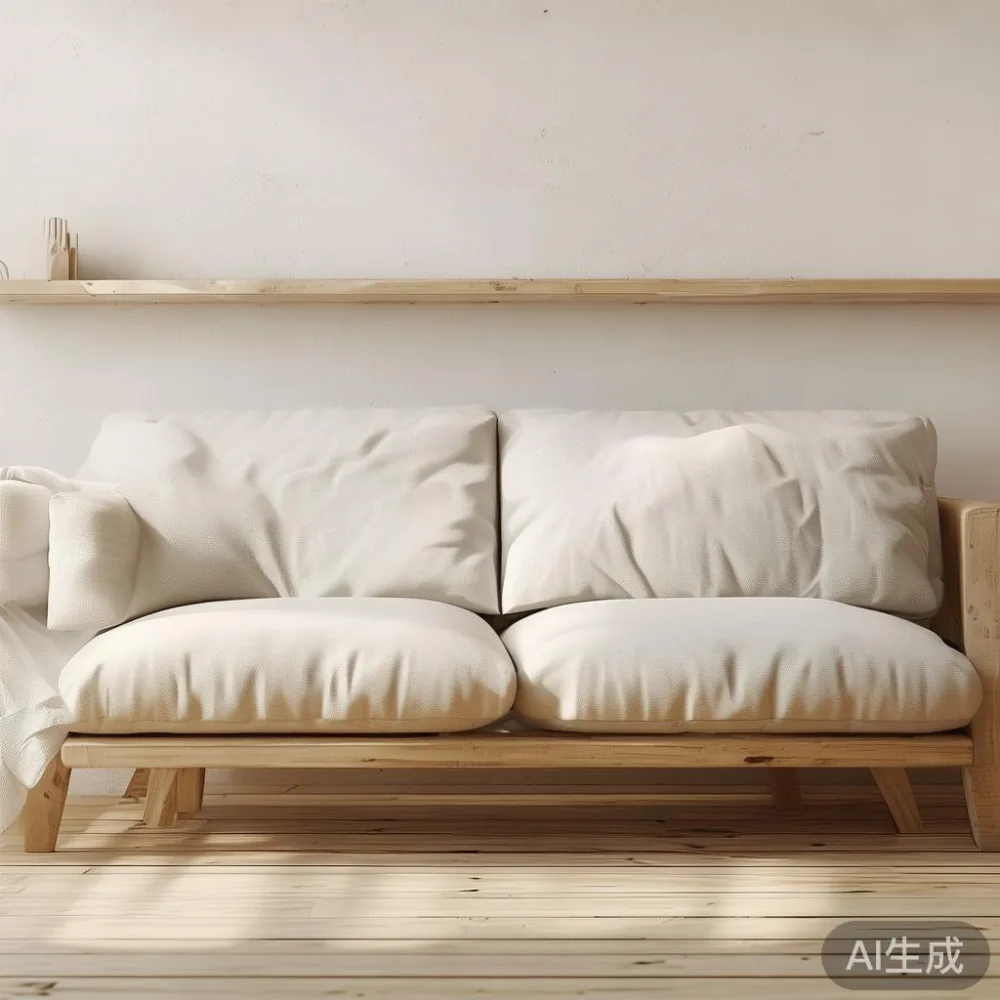
Singapore buyers ask me the same thing every weekend: why is one solid wood sofa SGD 699, and another SGD 2,400? Why does a queen bed frame range from SGD 550 to SGD 3,200? And honestly, can you really furnish a whole HDB flat on a budget under 1000 SGD without ending up with regret?
The short answer is yes, if you know the five things that move the price of solid wood furniture. The long answer is what follows.
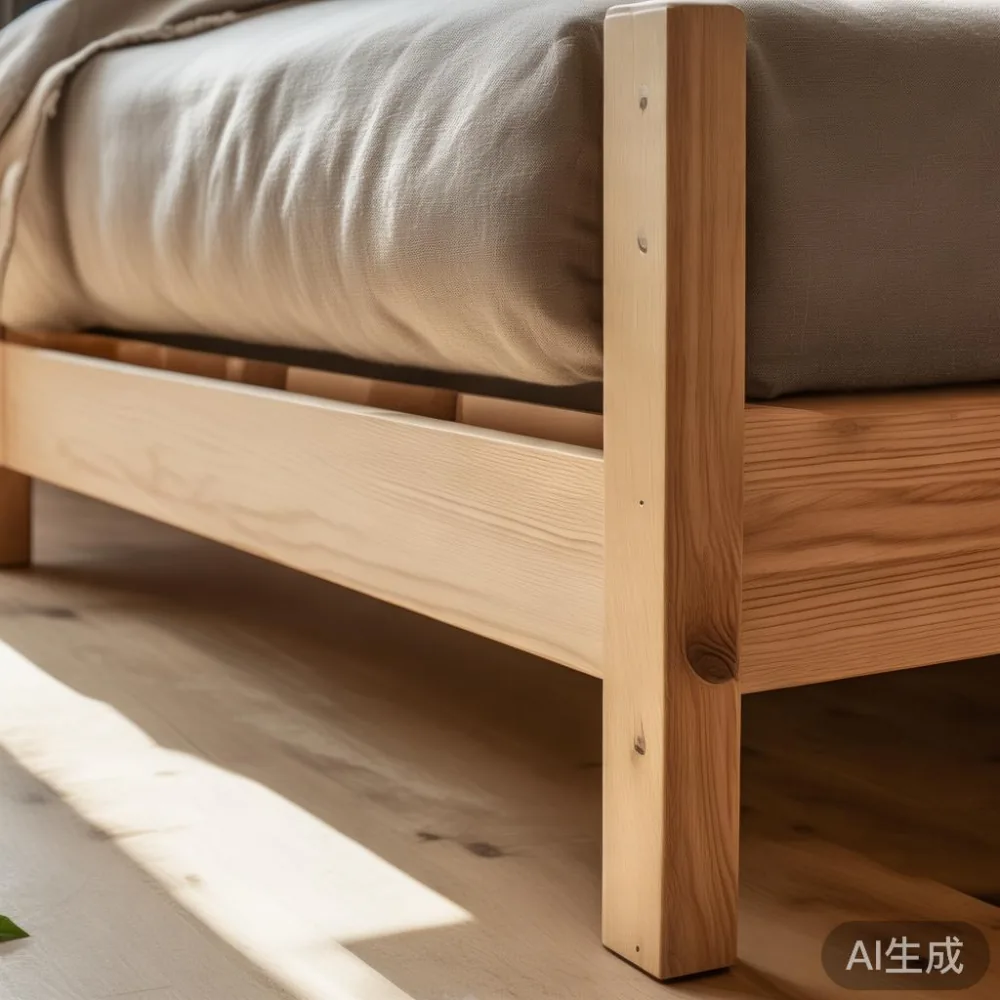
1. The Species of Wood (and Why a Bed Frame from Oak is Not the Same as One from Rubberwood)
Wood is not wood. The single largest cost driver in any solid wood sofa, bed frame, dining table, wardrobe, or nightstand is the species. In Foshan factories, where most of what reaches Singapore is made, the price ladder is roughly: poplar and rubberwood at the bottom, ash and acacia in the middle, white oak and walnut at the top.
Rubberwood is plantation timber from retired rubber trees in Malaysia and Thailand. It is genuinely solid wood, but the trees are only 15-25 years old at harvest, which means shorter boards and more joints. A queen bed frame in rubberwood might use 3-4 glued or finger-jointed sections per side panel. Cost to you: SGD 550-850. Lifespan: 10-15 years in air-con bedroom conditions.
Ash and acacia come from longer rotations, with longer, cleaner boards and tighter grain. A solid wood dining table in ash that seats six comfortably starts at around SGD 900-1,400. Walnut, the heavyweight, is dense (around 660 kg/m³), takes finishes beautifully, and is the wood most often used in American light luxury collections. A walnut nightstand with two drawers runs SGD 480-720, and a walnut wardrobe with three doors will easily hit SGD 2,800-4,500.
If you stay on a budget under 1000 SGD for a single big piece, you are realistically shopping rubberwood, ash, or acacia. Walnut and white oak come in at the next price tier.
2. How Much of the Piece Is Actually Solid
This is where buyers lose money quietly. "Solid wood" in Singapore retail can mean four different things:
a) 100% solid — every structural part, including internal shelves and drawer boxes, is one piece of timber. This is the rarest and most expensive. Expect 25-40% premiums.
b) Solid with veneer panels — the frame, legs, and tops are solid, large flat panels are a 0.6 mm veneer over a plywood or MDF core. This is the industry norm for pieces wider than 80 cm, because a 200 cm solid oak dining top will cup in Singapore humidity if not engineered carefully.
c) Solid frame, MDF doors — common in mid-range wardrobes. The carcass is solid, but the sliding flat panels are MDF with a wood-effect laminate.
d) "Solid wood" printed on particleboard — this is what the lift-flat rand was. Avoid.
When I toured the Bedok showroom last week, the salesperson pointed at two nearly identical pieces: a solid wood dining table at SGD 980 marked 100% solid acacia, and a "solid wood dining" table at SGD 620 that used solid legs and apron but an MDF top with an acacia print. The second one will scratch visibly within six months if you have kids eating acacia and I use that comparison loosely. Both pieces are technically legal to call solid wood under Singapore case law.
For a budget under 1000 SGD dining table that seats four to six, you are typically in scenario (b) or (c). That is fine, as long as you know.
3. Joinery, Hardware, and Finish (The Hidden 20%)
About 15-25% of what you pay for solid wood furniture is invisible. It lives in the drawer slides, the corner blocks, the type of glue, and the number of sanding passes before lacquer.
Drawer slides are the easiest tell. A budget drawer uses single-throw roller slides rated for 20,000 cycles; a French provincial sectional sofa uae shipment I followed last quarter used full-extension soft-close Blum slides rated 100,000 cycles. The Blum slides alone added about SGD 45 to each drawer. Across a six-drawer piece, that is SGD 270 — meaningful in a budget under 1000 SGD wardrobe.
Corner joinery is the next tell. Mortise-and-tenon, dovetail, and finger joints cost more in factory time. Stapled or screwed corners save on labor and fail on the third load. Lift the piece in the showroom. A solid wood nightstand should feel heavy for its size — a 45 cm wide nightstand in ash with two drawers should be 12-18 kg. Anything under 8 kg is suspicious.
Finish matters more in Singapore than in colder markets. Our humidity runs 70-90% for half the year, and the air-con cycles in HDB flats push wood through moisture swings daily. A poorly sealed piece will check, joints, and cup within 12-18 months. Look for at least two base coats plus a top coat of polyurethane or hard wax oil. Water-based low-VOC finishes cost the factory about 8-12% more in materials but are worth it for bedrooms and kids' rooms.
4. Design Language and Where the Piece Was Finished
Design tier affects price in ways that surprise buyers. A post-modern light luxury dining table in walnut with a marble inlay top is sold in Singapore for SGD 3,200-5,500. The same factory can produce a Scandinavian-style dining table in ash with no marble for SGD 1,100-1,600. The wood is comparable, the joinery is comparable, and yet the price is two to three times higher.
The difference is design language and finish detail. Marble table tops alone add SGD 600-1,200 in material cost depending on whether it is engineered or natural marble. Brushed brass handles cost SGD 18-35 versus SGD 2-4 for zinc alloy. Hand-rubbed French polish adds three labor days per dining table.
French light luxury (a style of French Provence trim work softened for modern HDB living) and American light luxury (a style of walnut and leather combinations inspired by East Coast townhouses) are the two design movements I see Singapore buyers asking about most right now. A French light luxury bed frame in ash, with a curved headboard and brass-tipped legs, retails around SGD 1,400-2,200. An American light luxury version in walnut with a chesterfield-style upholstered headboard sits at SGD 1,800-3,000.
Both will land in your HDB flat via lift and corridor. Both will need at least 70 cm of lift depth (the minimum Singapore HDB lift is 1.1 m wide × 1.4 m deep, modernized lifts in Punggol and Bedok reach 1.2 m × 1.8 m). Measure before you buy.
5. Shipping, Warranty, and What Happens If Something Goes Wrong
This is the cost line most Singapore buyers underweight. A solid wood dining table that weighs 45 kg shipped from Foshan to your Tampines flat involves ocean freight, customs, GST (9% on the landed value as of 2024), last-mile delivery, and often a lift-up surcharge if you live above the 7th floor without direct lift access.
Free shipping above SGD 350 is now common, but the threshold typically excludes upstairs carry-in. Expect SGD 30-80 per floor walked if the lift is too small or the item is too heavy to ride.
Warranty length tells you a lot about what the factory expects from its own product. A one-year warranty is the Singapore Consumer Protection (Fair Trading) Act baseline. A 5-year warranty is a mid-tier signal. A 10-year structural warranty, backed by a factory that has been operating since 2008 and exports to 15+ countries, tells you the factory is confident the joinery and wood drying are right. That kind of backing shows up in pieces from established Foshan makers like MIDHILL, whose solid wood sofa and bed frame pieces I have seen hold up after eight years of HDB use.
Lifetime refinishing is a separate but related point. Solid wood can be sanded and re-oiled two or three times across a 20-year lifespan. Particleboard cannot. So a SGD 980 ash dining table refinished twice across 20 years costs SGD 49/year. A SGD 600 printed-board wardrobe replaced once at year 10 costs SGD 60/year. The math flips when you factor in refinishing.
How do I style a Nordic queen bed in a small apartment?
A Nordic queen bed styled for a small Singapore apartment works best when the bed frame is solid ash in a pale natural finish, the headboard is under 110 cm tall, and the under-bed clearance is at least 15 cm so you can slide flat storage boxes underneath.
For a 12 sqm HDB bedroom in Punggol or Bedok, choose a queen bed frame with legs no taller than 20 cm (to keep the visual ceiling high), in ash or light-stained acacia, around SGD 950-1,400. Pair it with two slim nightstands (each 40-45 cm wide) rather than one bulky one. Skip an upholstered headboard if your door opens inward — it eats 12-15 cm of swing clearance.
Style cues that work: washed linen bedding in oat, white, or sage; one wool throw at the foot; a single wall-mounted oak shelf above the headboard instead of bulky bedside tables; a narrow wardrobe in matching ash on the wall opposite the bed.
Keep the color palette to three tones — the wood, the wall, and one accent. In a 12 sqm room, more than three visual tones start to crowd. The bed frame should anchor the room, not dominate it. Floor space around the bed should be at least 60 cm on three sides for daily movement and curtain access.
Putting It Together: A Realistic Budget Under 1000 SGD for a Starter Bedroom
Let me sketch what is actually possible today, with Singapore delivery days and realistic door widths:
• Solid ash queen bed frame (Nordic style, slatted base): SGD 850-1,050. Heaviest part is usually the headboard, around 18-22 kg. Fits through any HDB corridor (minimum 1.2 m wide).
• Two matching nightstands in ash, 40 cm wide each: SGD 320-460 per pair.
• A three-door wardrobe in ash with solid panels on doors, MDF carcass: SGD 1,400-1,900. This single piece blows the budget under 1000 SGD, so most buyers either phase it across two months or pick a two-door wardrobe at SGD 900-1,300.
• A small marble-top side table or coffee table for the living room: SGD 480-720 for engineered marble, SGD 900-1,400 for natural marble. The marble table adds visual weight to a room with otherwise light wood furniture.
For an entire HDB starter set on a budget under 1000 SGD, focus on one anchor piece — usually the bed frame or dining table — and add smaller items over three to six months. That is how my colleague furnished his Punggol flat: bed frame and one nightstand in month one, wardrobe in month three, dining table in month five. Total spend was about SGD 1,950 spread over five months, with GST 9% added at checkout on each shipment. He kept all packaging for 14 days in case anything needed to go back, and nothing did.
FAQ: Common Questions I Hear in the Showroom
Is rubberwood really solid wood?
Yes, technically. Rubberwood is real timber, just from younger trees. It is the right pick for budget under 1000 SGD pieces if the joinery is good.
How long does delivery take to Singapore from a Foshan factory?
Standard ocean air or sea air is 18-28 days door to door, plus 3-5 days for customs clearance. Express air freight cuts this to 7-10 days but adds SGD 120-280 per piece.
Will my HDB lift fit a 2 m wardrobe?
Modern HDB lifts in Tampines, Bedok, and Punggol estates built after 2015 are usually 1.2 m wide × 1.8 m deep. Older lifts in some 1990s blocks are 1.0 m × 1.4 m. A flat-packed 2 m wardrobe panel at 60 cm wide will fit both. An assembled 2 m wardrobe will not fit the older lifts.
What is a fair price for a solid wood sofa in Singapore?
A three-seater solid wood frame sofa with fabric or leather upholstery starts around SGD 1,400-2,200 in ash or rubberwood. Walnut frames with full leather start at SGD 3,800 and up.
Can I refinish a piece myself?
Yes for small nightstands and side tables. For dining tables and bed frames, professional refinishing in Singapore runs SGD 180-420 per piece and is worth it.
Where the Real Value Hides
After a dozen showroom visits this year, my view is simple. The price of solid wood furniture in Singapore is driven, in order, by species, proportion of solid material, joinery and hardware, design language, and shipping plus warranty. A budget under 1000 SGD is genuinely achievable for a single anchor piece if you pick ash or acacia, accept a veneered center on wide panels, and prioritize joinery over finish details.
What you should never do is buy on price alone. A SGD 499 "solid wood" dining table that arrives at 22 kg is a giveaway. A genuine 45 kg ash dining table at SGD 980 is, in real terms, a fair deal for a piece that will see you through two HDB leases and possibly your Punggol EC.
If you are shopping now, measure your lift, measure your corridor, pick your species, and lift the piece in the showroom. If it feels heavier than it looks, you are probably holding solid wood. If it feels lighter than it looks, you are holding a flat-pack wardrobe.