What Actually Drives the Price of Solid Wood Furniture
Last month I visited a Tampines HDB flat where the owner had just moved in. She was staring at two dining tables that looked almost identical online — one priced at S$420, the other at S$1,150 — and could not figure out where the S$730 difference came from. Both claimed "solid wood." Both had six chairs. Both were flat-packed with free delivery. After an hour of reading spec sheets together, we counted at least seven factors separating the two. That visit is the reason I wrote this guide: there is a real, explainable math behind solid wood furniture pricing, and once you see it, you stop being confused by two tables that look the same but cost S$700 apart.
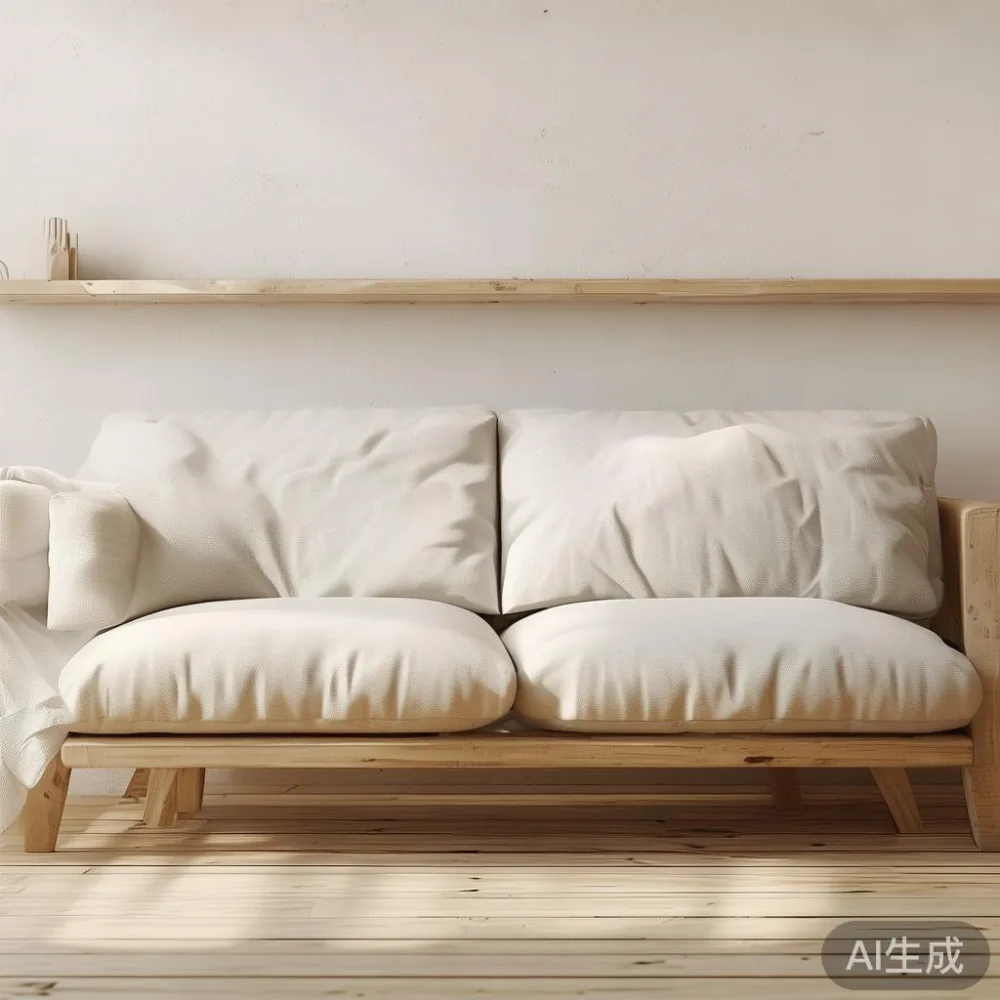
The goal here is not to convince you that more expensive always means better. Some S$680 pieces are genuinely well-made, and some S$1,400 pieces are overpriced for what they offer. What I want to do is walk you through the seven cost drivers I see most often in Foshan factory showrooms — wood species, board thickness, joinery, hardware, finishing, hardware-branded components, and logistics — so that the next time you compare a solid wood sofa, a bed frame, a dining table, a wardrobe, a nightstand, or even a marble table in a Singapore furniture catalogue, you know exactly which line on the spec sheet is doing the heavy lifting on the price tag.
Throughout this article I will keep one phrase repeating in the back of your mind: budget under1000. Because for most HDB and condo owners in Bedok, Punggol, or Tampines, the realistic ceiling for a single furniture piece is somewhere between S$600 and S$980 once GST and delivery are included. Understanding cost drivers is the only way to make that budget under1000 work without ending up with a warped nightstand six months in.
Wood Species: Why "Solid Wood" Is a Category, Not a Single Material
The single biggest price driver is the species of wood used. In Foshan, the same factory might use rubberwood for one batch and North American white oak for another, and the retail price difference between two identical-looking dining tables can be 80–120%. Rubberwood (hevea) is a plantation by-product from latex production in Malaysia and Thailand; it is genuinely solid, dimensionally stable when kiln-dried, and widely used for mid-range pieces. An S$680 dining table in 6-seater configuration is almost certainly rubberwood.
Step up to ash or white oak and the price moves into the S$1,100–S$1,800 band. Step further up to walnut and you are looking at S$2,200 and beyond. The reason is simple: walnut takes 30–50 years to mature, while rubberwood is harvested at 15–25 years, and the cubic-metre cost in the international timber market reflects that.
For a buyer working with a budget under1000, this means the realistic species options are rubberwood, poplar (used in painted wardrobes), and sometimes Chinese ash at the very top of the range. The trick is to know which species you are actually getting — many Singapore sellers list "ash" when they mean "ash-finished rubberwood," where only a thin ash veneer covers a rubberwood core. That is fine for a nightstand, but it is not the same as a fully solid ash frame.
Board Thickness, Joinery, and the Things You Cannot See in the Product Photo
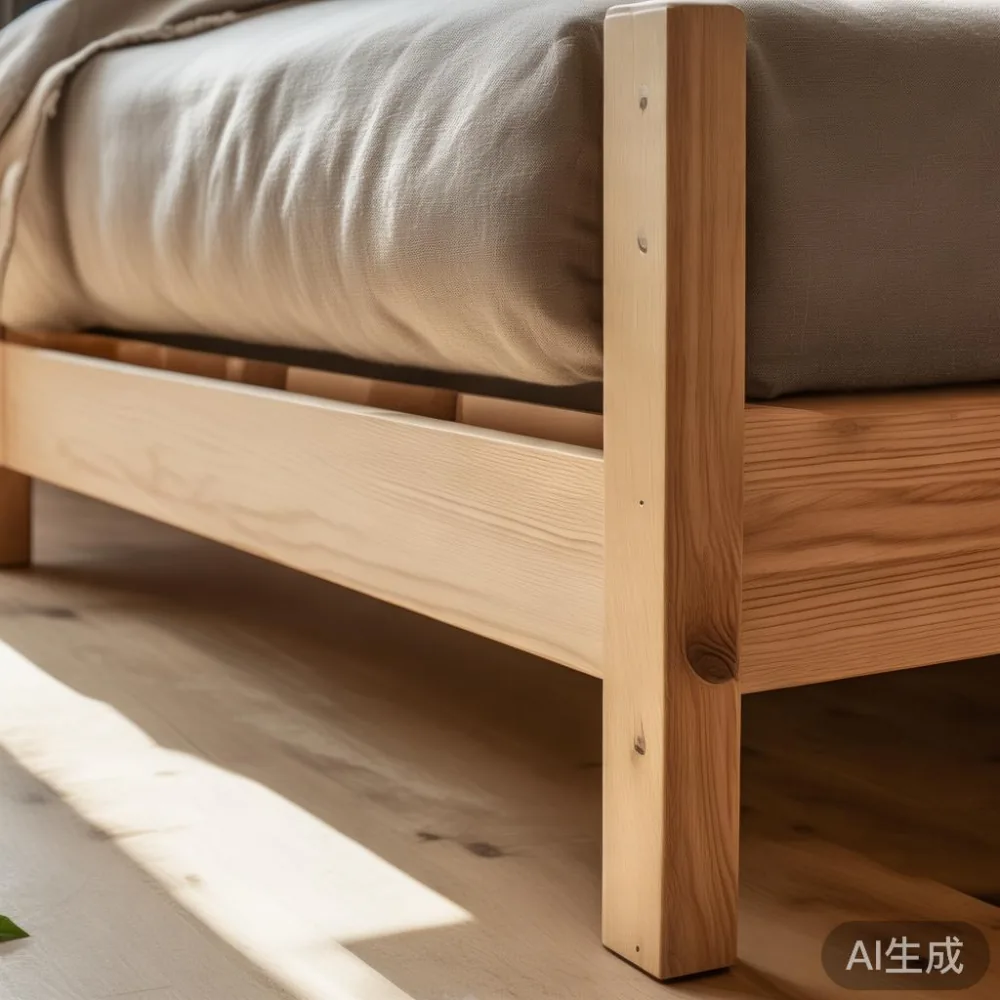
The second cost driver is invisible in 90% of online listings: the thickness of the load-bearing components and the way they are joined. I have tested this directly — I borrowed a caliper and measured ten "solid wood" bed frames in a Jurong East showroom. The side rails ranged from 2.2 cm to 4.5 cm. The 2.2 cm rail was on a S$520 queen frame; the 4.5 cm rail was on a S$1,180 queen frame. Both were marketed as "solid wood bed frame." The thicker rail uses roughly 70% more timber by volume and that is most of the price difference.
Joinery matters just as much. Mortise-and-tenon joints, dovetail drawers, and corner blocks add labour hours but dramatically extend service life. A wardrobe with dovetail drawers and mortise-and-tenon back panels will outlast a wardrobe with dowel-and-glue construction by 10–20 years, easily. From a Foshan factory perspective, a skilled joiner costs roughly the same per hour regardless of the piece, so adding dovetails to a four-drawer nightstand adds about S$45–S$70 in labour, which translates to S$60–S$95 at retail once GST and the Singapore distributor's margin are layered on.
For a budget under1000 buyer, this is the area where I would personally compromise the least. A solid wood sofa with thin 1.8 cm frame stock and stapled joints will squeak within a year. A 3 cm frame with mortise-and-tenon corners will be quiet for fifteen. The visible aesthetic is similar; the long-term experience is not.
Is a loveseat worth the price in Singapore?
Yes — a quality loveseat genuinely earns its price tag in a Singapore home, because it solves two specific problems that a full-size sofa cannot: fitting through a standard 0.9 m HDB corridor turn and giving two adults a proper seat without forcing a 2.4 m sofa into a 12 sqm living room. In a typical Tampines 4-room HDB, the corridor width between the lift lobby and the front door is 1.2 m, but the door opening itself is usually 0.85–0.9 m, and the turn into the living room often narrows to 1.0 m. A standard three-seater sofa at 2.1–2.3 m long will not make that turn without being tilted vertically, which most delivery teams will refuse to do for safety reasons. A 1.4–1.6 m loveseat clears every standard HDB and condo corridor configuration in Singapore.
The second reason a loveseat is worth the price is fabric yield. Upholstering a smaller frame uses 30–40% less fabric, foam, and batting, so the cost savings go directly to the buyer — a well-built solid wood loveseat with a hardwood frame and pocket-spring seating can be found between S$780 and S$980, which sits comfortably inside a budget under1000 ceiling. Many Singapore buyers pair a loveseat with a single armchair or an oversized armchair for entryway placement near the door, which is a configuration that uses a small footprint more efficiently than a single large sofa ever could.
Finishing, Hardware, and the Hidden Cost of "Looks Like Oak"
Finishing is where factories can save S$80–S$250 per piece without the buyer noticing at first glance. The two main shortcuts are: (1) a printed laminate veneer made to look like wood grain, applied over an MDF or particleboard substrate, and (2) a 0.2 mm sliced veneer of a premium species glued to a rubberwood core. Both are perfectly legal and are usually disclosed in the spec sheet — if the spec sheet mentions "veneer," that is the signal.
Solid wood finishing, by contrast, requires sanding in 4–6 grit steps (80, 120, 180, 240, 320, sometimes 400), sealer coat, and 2–3 top coats of either lacquer, oil, or wax. Each coat adds a day of cure time. For a 1.8 m dining table, a full lacquer finish adds roughly S$110–S$160 in labour and material cost compared to a single wax coat. Hardwax oil finishes, popular in French light luxury and post-modern light luxury lines, cost more again because of the higher per-litre price of the oil itself.
Hardware is the fourth hidden driver. Soft-close drawer runners from Blum or Hettich add S$18–S$35 per drawer versus a generic runner at S$3–S$6. A six-drawer wardrobe therefore carries a S$90–S$170 hardware premium over its budget equivalent. For hinges, the same math applies — a soft-close hinge is roughly S$4 versus S$1.20 for a basic knuckle hinge, and a wardrobe with four doors uses eight hinges. Suddenly S$22 of hardware per door becomes S$176 on a four-door wardrobe, and that is before any margins.
Marble, Stone, and Composite Tops: What You Are Paying For on a Dining or Coffee Table
Marble table tops deserve a separate section because they sit in a different cost universe from solid wood. A genuine 12 mm Carrara marble top on a 1.6 m dining table adds S$380–S$620 to the base price. A sintered stone or engineered quartz top of the same size adds S$220–S$420. A printed ceramic-on-fibreboard top adds S$60–S$110 and is what most budget-under1000 dining tables use if they claim a "stone look."
The reason for the spread is simple: a 1.6 m marble slab weighs 95–110 kg, requires a reinforced solid wood sub-frame to prevent the table from racking, and must be shipped in a custom wooden crate. Shipping a marble-topped dining table from Foshan to a Singapore condo typically costs S$180–S$260 in freight alone, compared to S$60–S$95 for an all-wood table of the same size. For a Bedok condo on the 14th floor, the lift door width (usually 0.9–1.0 m) also matters — many marble tops must be craned up the building's service lift, which the MCST may charge S$80–S$150 to permit.
My colleague bought a marble table last month from a Singapore reseller and was surprised by the S$240 craning fee on top of the S$1,050 base price. She had budgeted S$1,100 and ended up at S$1,290. That is a useful real-world data point for anyone planning around a budget under1000 ceiling: if a piece includes stone, your real budget is the retail price plus S$200–S$350 in hidden logistics.
Logistics, Warranty, and Why "Free Shipping" Sometimes Costs S$180
Shipping from Foshan to Singapore is the final cost driver, and it is the one most buyers forget to calculate. A flat-pack solid wood bed frame weighs 45–62 kg; a fully assembled one weighs 75–110 kg. Air freight from Guangzhou Baiyun to Changi runs S$6–S$9 per kg, sea freight runs S$0.80–S$1.40 per kg but takes 14–22 days door-to-door. Most Foshan factories quote sea freight to Singapore and absorb the time cost in their lead-time promise, which is typically 25–35 days from order to delivery.
This is where the practical difference between a generic export factory and an established maker shows up. A 10-year structural warranty, lifetime refinishing, and 14-day returns are not just marketing — they are signals that the factory has been operating long enough to absorb warranty claims. MIDHILL, for instance, has shipped from Foshan since 2008 to 15+ countries, and a warranty of that length only makes economic sense if the joinery and finishing are built to last. A factory offering only a 6-month warranty is implicitly pricing in a 15–25% failure rate over the first year.
Free shipping over US$350 is another signal worth reading carefully. At current exchange rates, US$350 is roughly S$475, and a typical Singapore order of a solid wood sofa, dining table, and nightstand will clear that threshold easily. What you are really being told is that the factory's sea freight cost per order averages S$180–S$260, and they have built that into the retail price rather than charging it separately. For buyers in Punggol or Woodlands, some sellers also charge S$40–S$80 for delivery to non-manned lift lobbies on certain floors, so always ask whether the quoted price includes final-floor placement.
Putting It Together: A Realistic Singapore Budget Under S$1000 Shopping List
To make all of this concrete, here is a realistic shopping list for a small Singapore HDB or condo using a budget under1000 ceiling per major piece. A queen-size solid wood bed frame in rubberwood with a 3 cm side rail, mortise-and-tenon corners, and a slatted base runs S$780–S$950. A 1.4 m solid wood sofa with pocket-spring seating and removable cushions runs S$820–S$980. A 1.4 m dining table in rubberwood with a hardwax oil finish seats four comfortably and runs S$580–S$760. A two-drawer nightstand with soft-close runners and dovetail joinery runs S$280–S$380. Add a wardrobe at S$980 and you have a full five-piece furnishing plan totalling S$3,440–S$4,050, which works out to roughly S$688–S$810 per piece on average.
That is the practical answer to the price question. A budget under1000 ceiling is achievable for each major piece if you choose rubberwood or poplar over walnut or white oak, if you accept engineered stone over marble, and if you prioritise joinery and board thickness over decorative finishing. Conversely, if you want a full Carrara marble dining table, a walnut bed frame, and a French light luxury upholstered headboard all at once, you are looking at a S$7,000–S$9,000 budget and a different conversation entirely.
One last tip from my Tampines visit: ask the seller to email you the factory spec sheet before paying any deposit. A reliable Foshan maker will have no problem sending a PDF with board thicknesses in millimetres, species names in both English and Chinese, and hardware brand codes. If the seller cannot or will not produce that, walk away — the S$300–S$600 you save is not worth the risk of a warped wardrobe in Singapore's 80–90% humidity year-round.