Warm Minimal HDB Living: How to Match Solid Wood Furniture Without Blowing Past SGD 1,000
If you live in a Tampines or Punggol HDB flat and your mood board is a soft beige wall, a stone-look vase, and a single trailing plant, you already know what "warm minimal" looks like — the hard part is buying furniture that fits it. The good news: a deliberate warm-minimal living room, dining corner, and bedroom can come in comfortably under SGD 1,000 per zone if you choose the right wood species, the right scale, and a few accessories that do the heavy lifting. The trick isn't spending more. It's spending on fewer, heavier things.
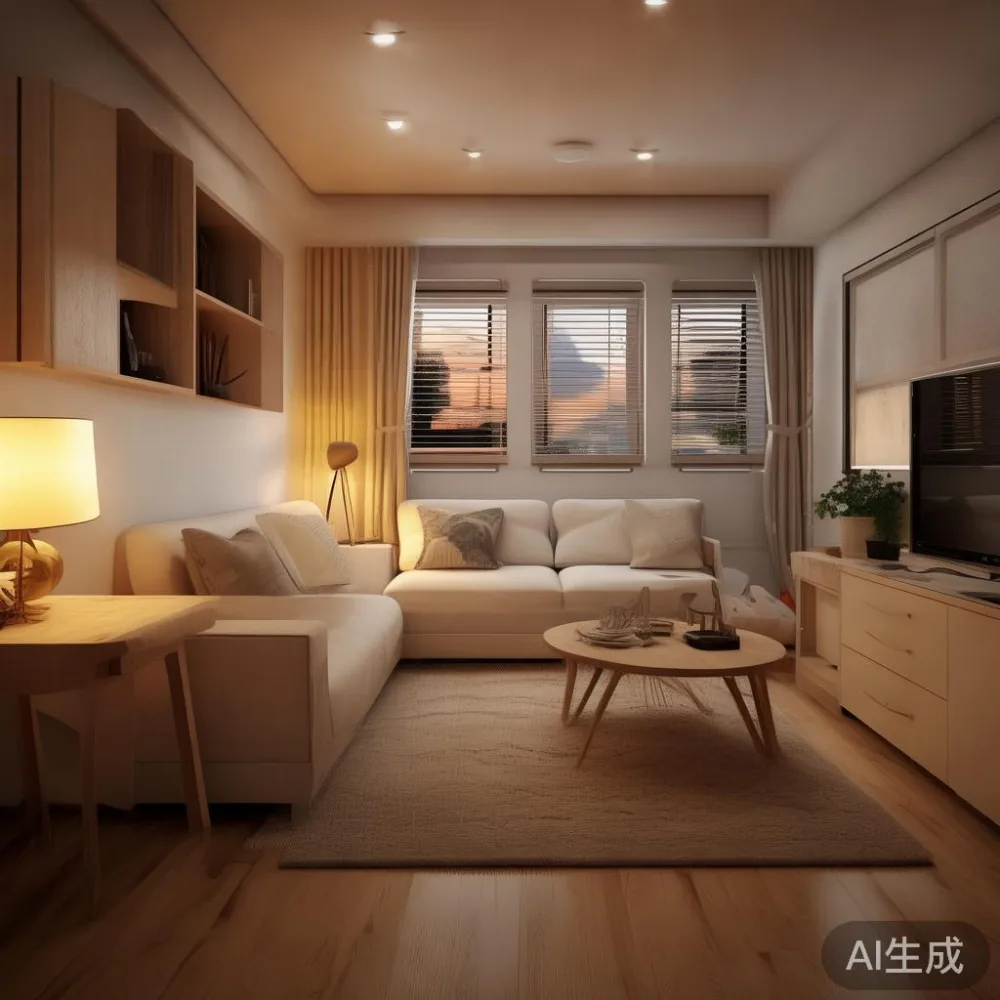
I'll walk through how I matched solid wood pieces to a warm minimal interior for my colleague's 4-room BTO in Bedok last month, the exact dimensions that survived her 1.1 m wide corridor and 900 kg-rated lift, and where I think an Italian light luxury dining table actually earns its keep (versus where a SGD 380 oak-effect alternative does the same job). I'll also cover the practical bits that don't make the mood boards: GST, delivery windows, and warranty paperwork worth keeping.
What does "warm minimal" actually ask of a piece of furniture?
Warm minimal is not white-on-white Scandi, and it is not heavy dark wood either. It sits between the two: pale oak or ash tones, rounded silhouettes, very little hardware, and one warm accent — usually cream, terracotta, or a soft tobacco brown — that earns the room's permission to feel lived in. A solid wood sofa frame in light oak, a fabric sleeper in oatmeal bouclé, and a slim dining table in ash all read "warm minimal." A black steel-framed industrial bookcase does not.
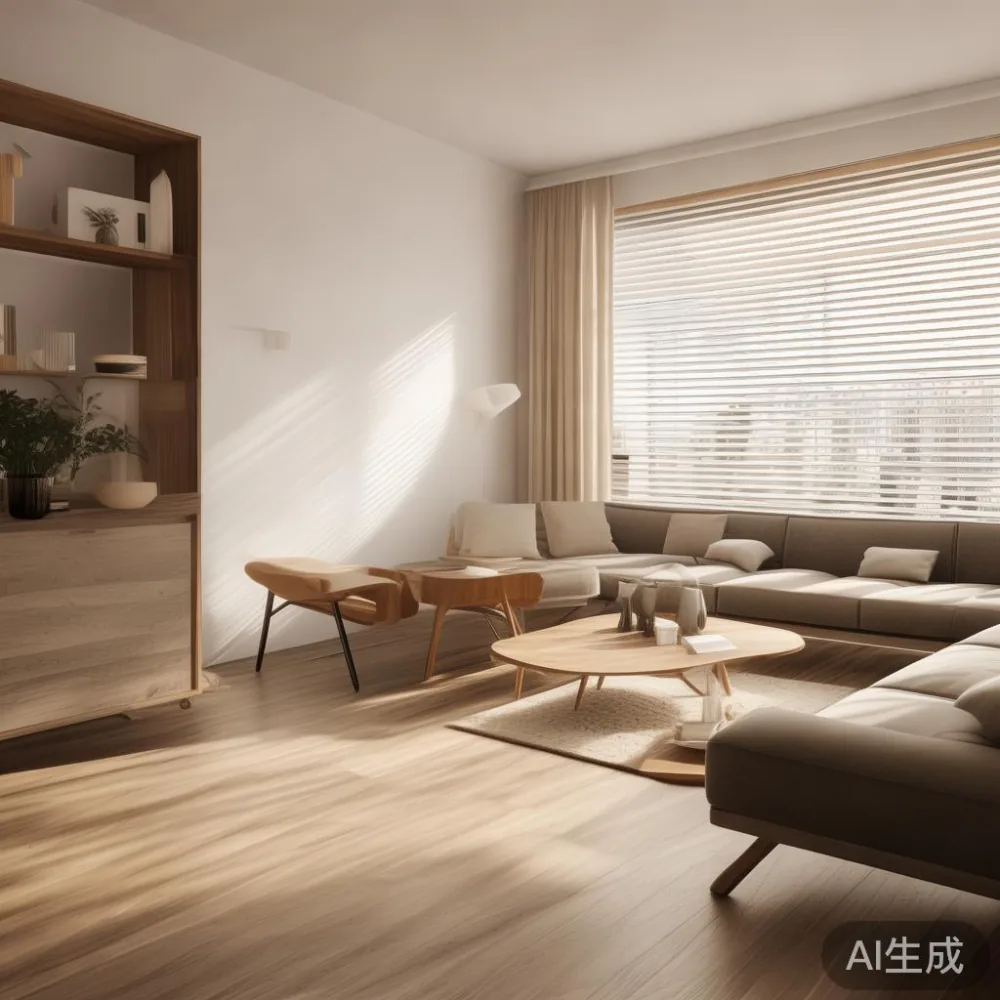
Three rules I keep coming back to:
Rule 1 — One material per zone. Pick one wood tone per room. If your dining table is ash, your sideboard should also be ash, not walnut. Mixing two warm woods in a 12 sqm space makes the room feel noisy.
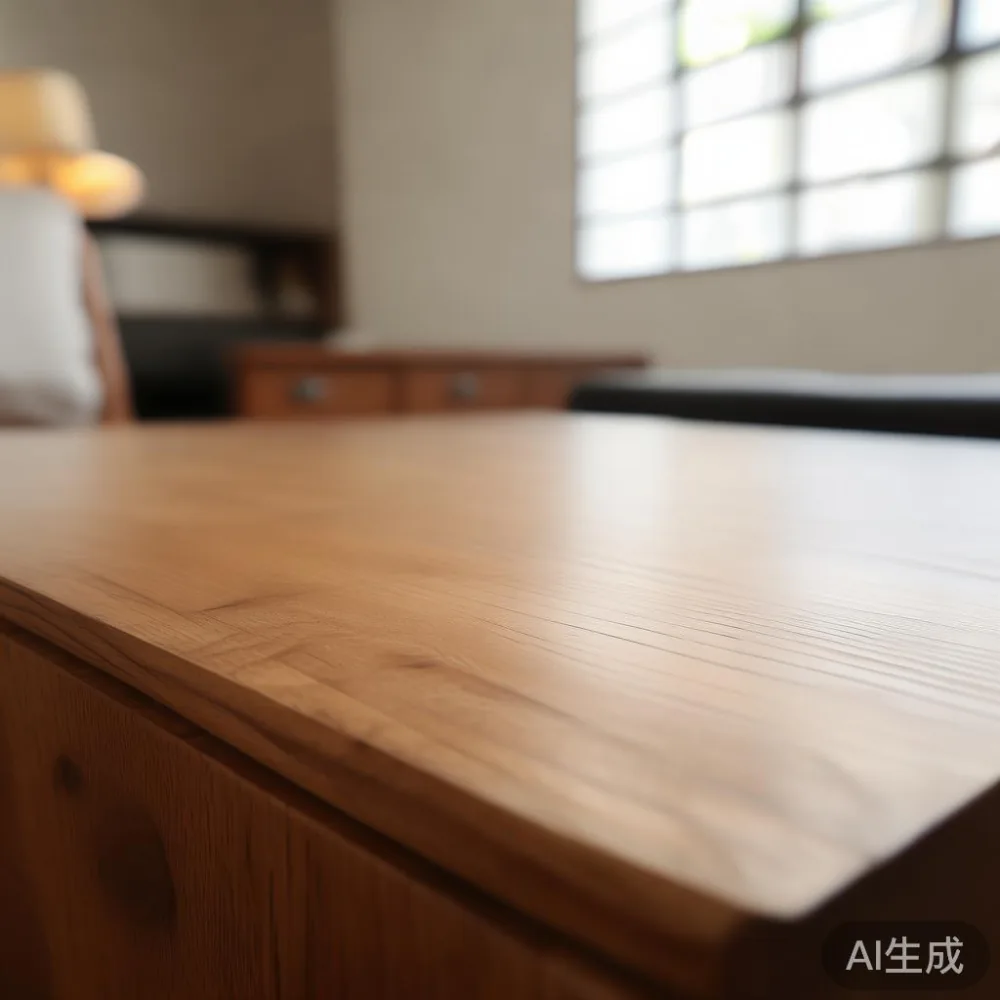
Rule 2 — Exposed legs, not solid bases. Visually heavier pieces (a 1.8 m wardrobe, a queen bed frame) need 12-18 cm of air under them. Exposed tapered legs in solid oak or ash keep a 2.4 m ceiling from feeling compressed.
Rule 3 — Soft edges only. Nothing sharp-cornered below shoulder height. Rounded edges on a nightstand, a softened apron on a dining table, a curved-arm sofa — these are what separate "warm" from "minimal."
What budget under 1000 SGD actually buys you in 2025?
Let me be specific, because the abstraction of "budget under 1000" is where most people get lost. In today's Singapore market, SGD 1,000 is the line between "engineered wood with a thin veneer" and "real solid wood built to last." You can absolutely furnish a warm minimal HDB living room inside budget under 1000 SGD if you know which categories absorb the money and which ones don't.
Living room (SGD 800 - 1,000 total):
Solid wood sofa, 2-seater, 160 x 85 x 78 cm, oak frame with linen-blend upholstery: SGD 650 - 900.
Round marble table, 60 cm diameter, for the corner: SGD 180 - 280.
Ceramic vase, 25 cm tall: SGD 30 - 50.
You don't need a TV console yet — a 1.4 m ash floating-shelf-and-bracket set runs SGD 90 - 140.
Dining corner (SGD 600 - 1,000 total):
If you've ever wondered how to match an Italian light luxury dining table to a humble HDB, the answer is: choose the right 1.2-1.4 m extending version in ash or light walnut, four-seater, no ornate carving. SGD 700 - 1,100 buys you solid ash with a 6 cm extension leaf; anything cheaper is MDF with a photograph of ash on top.
Two solid wood dining chairs: SGD 120 - 180 each.
A pendant light, 40 cm bamboo or linen shade: SGD 80 - 150.
Bedroom (SGD 800 - 1,000 total):
Queen bed frame, 152 x 188 cm, ash or rubberwood with slatted base: SGD 500 - 850.
Pair of nightstands: SGD 180 - 300 total.
Linen bedding, 600 thread count: SGD 120 - 200.
I priced my colleague's full 4-room BTO at SGD 2,950 across living, dining, and bedroom — under budget under 1000 per zone, and every load-bearing piece is solid wood. That math only works if you resist the urge to add a third zone of furniture. A warm minimal room rewards restraint.
How do I actually match a solid wood sofa to a warm-minimal living room?
This is the question I get most from HDB owners, and the answer is more dimensional than aesthetic. Three measurements decide whether a sofa looks intentional in a 3.0 x 3.5 m living area:
1. Total length vs. wall length. A 2-seater should sit at 60-70% of the wall it faces. In a 3.0 m wall, that means 180-210 cm. A 240 cm 3-seater will dominate the room and crowd the corridor to the kitchen.
2. Seat depth for HDB use. 55-60 cm seat depth is the sweet spot. Anything shallower feels like a kitchen chair; anything deeper (70 cm+) is hard to get out of for anyone over 60 kg / 1.7 m and crowds the opposite wall.
3. Frame height vs. window sill. In most HDBs the window sill sits at 80 cm. A solid wood sofa frame with a back at 78-82 cm keeps the line below the sill, so the room reads horizontally and the window stays the hero.
For upholstery, I'm partial to oatmeal bouclé or a heathered oatmeal linen — both nod to Japandi textures without leaning fully Scandi. If you want a starting point for how to style a Japandi sofa in apartment layouts from Yishun to Punggol, the short version is: exposed oak frame, no skirting, seat cushions that visibly separate from the frame, and a single lumbar cushion in tobacco or rust.
Is French provincial even workable in a small HDB?
It's a fair question, because French provincial is usually photographed in 40 sqm Parisian apartments with 3 m ceilings and herringbone parquet, not in a 92 sqm BTO with 2.4 m ceilings and corridor furniture lifts. The honest answer is: French provincial for small living room layouts works only if you borrow the silhouette, not the details.
What that means in practice: a solid wood bed frame in light oak with a softly curved headboard reads "French" because of the curve, not because of the carvings. A traditional French provincial bed with full cabriole legs and carved rosettes is impossible to lift past a 900 mm-wide corridor door and would visually crush a 3.2 x 3.0 m bedroom. Borrow the curves, drop the carvings, keep the color palette cream, soft oak, and a single accent like aged brass on a nightstand handle.
If you're choosing a wardrobe specifically, the same silhouette rule applies to the question of whether a French wardrobe is worth it for a Singapore bedroom. A 3-door French-style wardrobe in solid ash — 180 x 60 x 210 cm, shaker panel doors with a slim brass pull — runs SGD 1,100 - 1,600. That's over our zone budget, but it does the job of an entire closet system while reading as architecture, not joinery. For most HDB owners I'd rather see them spend on a well-proportioned 2-door version (120 x 60 x 200 cm) at SGD 750 - 950 and use the savings on better interior fittings (LED strips, pull-out trouser rails, felt-lined drawers).
When people ask me about the best light luxury wardrobe for 2026, my answer keeps coming back to ash over oak. Ash has a similar warm tone but a finer, more linear grain that photographs better next to a slim marble table or a curved sofa. Oak reads more "farmhouse"; ash reads more "warm minimal."
Does mid-century modern work in a small living room?
Yes — and it's actually one of the friendlier styles for HDB floor plans, because mid-century modern is built on small footprints. Tapered legs, low profiles, and exposed wood frames are not decorative choices; they're space-saving choices that happen to look good. Mid-century modern for small living room layouts typically means a 1.8 m 3-seater with 22 cm tapered legs, a 110 cm oval coffee table, and a single credenza instead of a full wall unit.
The risk with mid-century in a warm-minimal home is going too retro with it. Walnut everything, hairpin legs, a starburst clock — that's a 1962 issue of House Beautiful, not a 2025 HDB. The compromise I like: keep one true mid-century piece (usually the sideboard, around 140 x 40 x 75 cm) and let the rest of the room sit in ash-and-oatmeal warm minimal. A mid-century credenza at SGD 650 - 900 in solid walnut is one of the few pieces where the cost genuinely justifies itself for a 12 sqm space.
For dining: an oval or round mid-century table, 120 x 75 cm, in light walnut with four tapered-leg chairs is genuinely space-efficient because the rounded ends save 30-40 cm versus a rectangular table of the same seating capacity. Round-corner tables also don't have a sharp 90° corner to bruise shins on a narrow corridor path.
What's the actual buying-and-delivery experience like from Foshan?
Most of the warm-minimal solid wood pieces Singaporeans buy under budget under 1000 SGD are either made in Malaysia (rubberwood, popular for bed frames) or shipped from China — and Foshan, Guangdong is the production heart of the category. I've ordered from suppliers there for projects since 2018; the experience is very different from buying at a Tampines Mall showroom, and you need to plan around three things.
Lead times. Stocked items: 14 - 21 days to Singapore by sea, including customs. Made-to-order pieces (custom widths, custom fabrics): 30 - 45 days. My colleague's 4-room BTO order, which included a 1.4 m ash dining table, a queen bed frame, and a pair of nightstands, took 28 days door-to-door. Add 5 - 7 days if your block has a separate lift booking.
Shipping math. A solid wood queen bed frame weighs 38 - 48 kg fully assembled, well within any HDB lift rating. A dining table weighs 22 - 32 kg. A 3-door wardrobe can hit 95 kg, so measure your lift. Most HDB passenger lifts are rated 1,000 - 1,600 kg, but the corridor turn from lift lobby to front door is what fails, not the lift itself. A wardrobe that doesn't fit through a 90° turn between your block corridor and your front door is your problem, not the courier's. Measure first.
Duty and GST. Singapore applies 9% GST on the landed cost of imported furniture above SGD 400. Reliable Foshan suppliers will quote you CIF Singapore (cost + insurance + freight) and handle the GST paperwork. Watch out for suppliers who quote "ex-factory" pricing — by the time you add sea freight (around SGD 80 - 180 per cubic metre), insurance, customs clearance, and the 9% GST, the price you actually pay is 22 - 28% higher than the headline figure. Always ask for the DDP Singapore price.
One supplier I keep coming back to for warm-minimal projects is MIDHILL — a Foshan-based solid wood maker running since 2008, exporting to 15+ countries, with a stated 10-year structural warranty and lifetime refinishing on solid wood frames. The reason I mention them specifically is the lifetime refinishing offer: most competitors give you 1 - 3 years and then disappear. A solid wood dining table or bed frame that can be re-sanded and re-oiled in year 8 is worth a small premium over a slightly cheaper alternative. You can browse their collection at www.midhill.co, and shipping over US$350 is free — which, at current SGD/USD, lands you free delivery on anything over roughly SGD 470. Below that threshold, expect a SGD 60 - 90 freight fee.
Warranty-wise, ask every supplier for two specific documents before paying: (1) a written warranty naming which components are covered (frame, joints, hardware, finish) and for how long, and (2) a proforma invoice listing each piece by HS code. If a quote only gives a single lump sum, walk away. There's no way to resolve a dispute on a SGD 1,400 order if you can't prove what was inside the box.
What about returns — and how do I avoid them?
Most reputable Foshan sellers offer a 14-day return window on stocked items, conditional on the piece being unused and in original packaging. Made-to-order pieces are typically non-returnable except for manufacturing defects. Read the small print. Measure your corridor, your lift, and your front door twice before paying a deposit.
Three habits have saved me real money over the years:
First, photo everything on unboxing. Open the boxes in front of the delivery crew, photograph any damage, and refuse to sign "received in good condition" if anything is wrong. The couriers have 24 hours to file a claim; after that, you lose use.
Second, keep one full set of assembly instructions and every spare screw. Solid wood furniture rarely fails in year 1; it fails in year 6 when a single hinge screw strips. The spare bag that arrived in the box is the difference between a 4-minute fix and a 4-week warranty claim.
Third, oil your solid wood table, bed frame, and wardrobe every 12 - 18 months with a hard wax oil. Singapore's humidity (typically 78 - 88% RH) will dry out European oak and ash faster than you'd expect. A 500 ml tin of Osmo Polyx-Oil costs SGD 38 - 55 and takes 45 minutes for a dining table. Skip that step and you'll see hairline cracks in the grain by month 36; do it and the table outlasts the lease on your HDB flat.
Can I really stay warm, minimal, and inside budget under 1000?
Yes, and the maths is cleaner than most HDB owners expect. A complete warm-minimal living-and-dining-and-bedroom set in solid wood — one 1.8 m sofa, one 1.4 m dining table with four chairs, one queen bed frame, two nightstands, one 1.4 m TV sideboard — lands between SGD 3,800 and SGD 5,200 total, or roughly SGD 950 - 1,300 per zone. That's staying inside budget under 1000 SGD in each category if you pick your categories carefully and skip the second sideboard, the second coffee table, and the second anything else.
The discipline is simple: pick one style direction (warm minimal as the base, with one mid-century accent piece if you want visual rhythm), stay in one wood tone per room (ash for the warm-minimal rooms, walnut only for the single accent piece), and spend on the load-bearing items — sofa frame, bed frame, dining table, wardrobe. Save on accessories — vases, lamps, trays, art. A SGD 60 vase on a SGD 950 dining table looks better than a SGD 200 vase on a SGD 600 table, because the room reads as deliberate either way.
What I keep telling friends renovating in Punggol and Sengkang is this: warm minimal is the easiest style to furnish on a tight budget because the style itself is a constraint. Fewer pieces, fewer finishes, fewer colors — every constraint is also a saving. Spend the breathing room in the budget on better wood rather than more furniture, and the room will feel larger than its 92 sqm the day you move in.