Solid Wood vs Veneer Over 5 Years: A Real Singapore Cost Breakdown
I moved into a 4-room HDB flat in Tampines eight years ago, and my first dining table cost me SGD 380 from a Geylang furniture shop. It was a paper-and-veneer piece with a glossy top. By year three, the surface had bubbled near the air-con vent, and by year four, the legs were wobbling so badly I shoved folded cardboard under them whenever relatives came over. Last month I visited a colleague's resale condo in Punggol and sat at a MIDHILL solid oak dining table she bought for SGD 920. After four years of two kids, three birthday parties, and one major curry-spill incident, the top looked barely touched. That afternoon at her place is what pushed me to actually run the numbers properly. If you are furnishing a Singapore home on a budget under 1000, the choice between veneer and solid wood is not just about today — it is about what the piece costs you across five full years of HDB living, kopi stains, and afternoon thunderstorms that warp every door in the corridor.
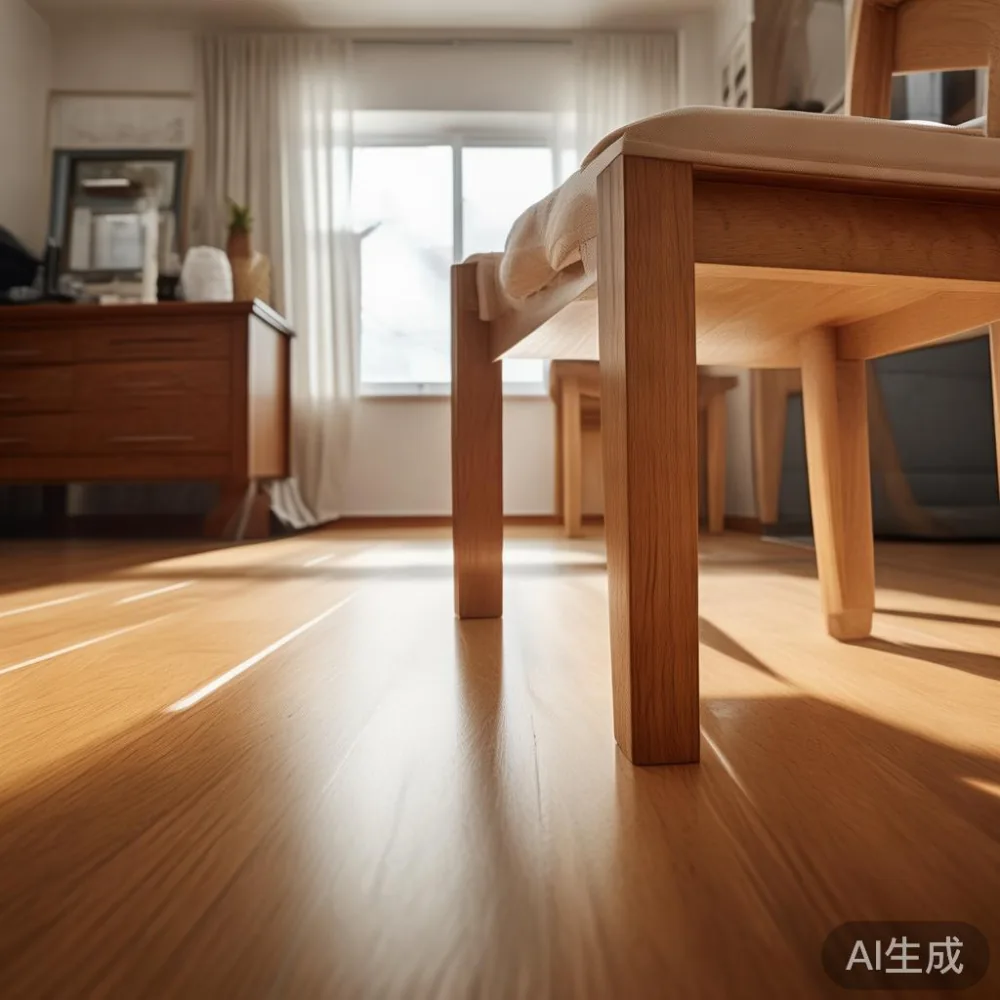
What does veneer actually cost over 5 years in an HDB flat?
Let me do the maths on the cheap route. A typical veneer dining table in Singapore retails between SGD 280 and SGD 550, which sounds friendlier at the till. But here is the real ledger I keep seeing across friends in Bedok and Toa Payoh: peeling at the edges by month 18 to 30, swollen particleboard legs by year three, and a disposal fee of SGD 60 to SGD 120 because the bulk waste guys at Tampines Hub refuse to take water-damaged flat-pack furniture. Add one round of professional refinishing at SGD 180 to 280 (if you can even find a carpenter willing to work on chipboard), and one replacement unit at the same SGD 350 mid-range you paid originally. Over five years, the veneer path lands between SGD 870 and SGD 1,350 — and you still end up with a wobbling table on year five. A budget under 1000 shopper picking veneer often quietly blows past that ceiling once they admit the piece needs replacing.
What does solid wood actually cost over 5 years in an HDB flat?
Solid wood costs more on day one. A genuine solid wood dining table from a Foshan maker like MIDHILL sits around SGD 880 to 1,250 delivered. Add a solid wood bed frame at SGD 720 to 950, a four-seater solid wood sofa at SGD 1,150 to 1,650, a 3-door wardrobe at SGD 1,050 to 1,480, and a pair of solid wood nightstands at SGD 280 to 420. Spread the whole package across the lifespan numbers they actually deliver, which is 15 to 25 years for bed frames and wardrobes, and 10 to 15 years for sofas and nightstands, and the per-year cost drops dramatically. The same package bought in veneer form across the same five-year window almost always requires at least one full replacement cycle for the sofa and the dining table. That single replacement wipes out the entire price difference you thought you saved on day one. Buyers comparing budget under 1000 furniture in Singapore often miss this because they compare sticker prices, not five-year totals.
Why does veneer fail faster in Singapore's humidity?
Singapore sits at 80 to 95 percent relative humidity most nights. Veneer is a 0.6 to 3 millimetre decorative layer glued onto MDF, particleboard, or plywood. Once the humidity creeps past the glue's rating, the layer separates from the substrate and you see bubbles, lifts, and chips. I have personally seen a friend's IKEA veneer wardrobe in a Punggol condo corner unit develop a 12 centimetre lift along the side panel within 14 months — the air-con could not keep up with the west-facing afternoon sun through the bedroom window. Solid wood breathes. It expands and contracts along the grain by 2 to 4 percent across seasons, but it does not delaminate. MIDHILL's kiln-drying process brings moisture content down to 8 to 12 percent before assembly, which is the same range used for European oak shipped to Mediterranean climates. That is the technical reason a solid wood bed frame survives a Tampines HDB bedroom with the window cracked open during a thunderstorm, while a veneer one starts peeling at the headboard corners.
What size care sofa do I need?
For a Singapore three-seater HDB living room, a 200 to 220 centimetre wide solid wood sofa gives you a 180 to 200 centimetre usable seat depth once you account for back cushions, fits through a standard 90 centimetre HDB service lift door with at least 8 centimetres to spare, and leaves a 70 to 90 centimetre walkway past the dining table. For a four-seater condo layout in Punggol or River Valley, step up to a 240 to 260 centimetre frame with a 210 to 230 centimetre seat. Anything over 270 centimetre wide usually blocks the corridor access in older walk-ups. Always measure the lift diagonal of your block first — most Bedok and Tampines blocks run 1.35 metres door height by 0.9 metres door width, and a solid wood sofa frame with arms adds 8 to 12 centimetres to the diagonal you need to clear. This is the size range MIDHILL builds for, because their export line is calibrated to the lift dimensions of mid-rise Asian apartments, not just American suburban doorways.
How does delivery actually work in Singapore, including GST?
Most Singapore furniture buyers do not think about delivery until the truck arrives. For furniture over USD 350 (about SGD 480), MIDHILL includes free shipping to Singapore addresses, which lands at your door in 18 to 28 working days from Foshan via the PSA terminal. Lift access at your block matters: ground-floor and second-floor walk-ups usually run SGD 40 to 80 surcharge per floor per piece because the crew has to hand-carry past narrow corridor turns. GST is charged at 9 percent on the landed value for personal shipments under SGD 400, which is rarely the case for a full solid wood set. Returns inside 14 days are honoured on stocked models, with the buyer covering a SGD 120 return freight. Refinishing on solid wood pieces is offered for life at a subsidised SGD 18 per square metre rate — that is a real number for a budget under 1000 owner who can sand out a ring stain rather than throw away a 25 kilogram dining table. A 10-year structural warranty covers the joints, dowels, and load-bearing rails, which is the part of the piece that actually fails on cheap veneer furniture.
What about style — does solid wood actually look good in a 2025 HDB?
This is where I push back on the old assumption that solid wood means heavy rosewood and dark teak that swallows a small living room. American light luxury and French light luxury directions — think pale oak, ash, and whitewashed walnut — pair naturally with a 90-square-metre HDB flat in Tampines or a 1,200-square-foot condo in Punggol. Post-modern light luxury adds curved edges on a marble table, a tapered solid wood nightstand with brushed brass pulls, and a bed frame with a low upholstered headboard in oatmeal linen. I saw exactly that combination last month at a friend's new BTO in Sengkang, where MIDHILL supplied a pale ash dining table, an Italian light luxury headboard for rental with a channel-tufted panel that matched her landlord's cream sofa, and a small marble table for the entryway. The whole living-dining zone read light, calm, and curated — not bulky, not dark, not "Chinese traditional". For a budget under 1000 shopper building a single room at a time, this kind of style flexibility matters because you will not throw the piece out when the next HDB palette drops.
How do I decide if the higher day-one price is worth it?
Run the honest calculation. Take the sticker price of a solid wood bed frame at SGD 850, divide by 15 years of expected service, and you get SGD 56.67 a year, or SGD 4.72 a month. Take a veneer bed frame at SGD 420, assume one full replacement at year four, plus a SGD 60 disposal, and divide by five years. You land at SGD 96 a year, or SGD 8 a month, and you have done the replacement cycle once already with another likely ahead. Solid wood is not a luxury splurge — it is a budget under 1000 strategy that respects Singapore's humidity, your lift access, and the resale value of your flat when you eventually move. It is also kinder to the resale buyers who inherit your furniture and notice when a wardrobe still closes square after eight years. If you are furnishing one piece at a time, start with the piece your family touches every day — a solid wood sofa, a solid wood dining table, or a solid wood bed frame — and let the cheaper storage pieces follow once the budget frees up.
Are there pieces where veneer is honestly the smarter call?
Yes, and I will not pretend otherwise. A wardrobes interior — adjustable shelves, small drawer boxes, behind-the-door organisers — is fine in high-quality plywood or MDF because the structural work happens at the carcass, not the cosmetic surface. A kids' study desk that will be replaced when they enter secondary school does not need solid wood legs. A TV console in a guest bedroom that sees two weekends of visitors a year can be veneer without anxiety. The point is not that veneer is bad in every room. The point is that the pieces you sit on, sleep on, and eat at — the solid wood sofa, the bed frame, the dining table, the nightstand beside your head — those earn their weight in solid wood because the load, the sweat, the humidity, and the daily contact are highest there. A marble table in the entryway is a similar call: solid base, engineered top, used twice a day. Spend your solid wood dollars where the contact hours are highest, and let the budget under 1000 logic cover the rest.
What does the next five years actually look like for each buyer?
The veneer buyer is shopping again in late 2027, probably on Carousell or Facebook Marketplace, hunting for a 1.2-metre dining table under SGD 200 to replace the one they bought in 2025. They will load it into a Grab XL, assemble it in the bedroom, and hope it survives until they collect the keys to their next place. The solid wood buyer is sanding out a coffee ring on the same oak dining table in 2030, sending a photo to MIDHILL's refinishing desk, paying SGD 36 for a partial refinish, and using the same table in their new Punggol condo in 2032. Both paths are real Singapore stories — I have friends on each one. The five-year arithmetic I have walked through here is the reason my next HDB reno, scheduled for the second quarter of next year, will be a solid wood package from a Foshan maker that ships directly, not another flat-pack from a Jurong warehouse that will delaminate before the lease ends.
Frequently Asked Questions
Can solid wood really fit a budget under 1000?
Yes — a single piece almost always does. A solid wood nightstand runs SGD 140 to 220, a small dining table for two runs SGD 480 to 650, and a solid wood bed frame in queen size runs SGD 720 to 950. The whole-room package is what stretches past 1,000, which is why most Singapore buyers rotate the upgrade by room.
Is MIDHILL shipping to HDB blocks with single-corridor lift access?
Their standard delivery handles 90 centimetre lift doors and 2.4 metre corridor turns, which covers every HDB block built after 1990. For pre-1990 walk-ups in Tiong Bahru or older Queenstown, the team does a pre-survey and charges the floor surcharge per piece.
How long does a Foshan-to-Singapore shipment really take?
18 to 28 working days for stocked models, 35 to 50 days for custom upholstery or special marble table tops. The 9 percent GST is calculated on the CIF value at PSA clearance.
What if my flat has west-facing sun and afternoon thunderstorms?
Keep the room ventilated, run the air-con for at least two hours during peak humidity, and pull the solid wood bed frame 10 centimetres off the wall for air circulation. Solid wood handles this cycle better than veneer because the grain can move; the glue line in MDF cannot.
Is refinishing really lifetime?
For the original owner of the piece, yes. The first refinish after year five is subsidised; after that, the SGD 18 per square metre rate covers sanding, stain, and two coats of water-based matte finish. Veneer pieces usually cannot be refinished at all once the top layer wears through.