Solid Wood vs Veneer Over 5 Years: What a Budget Under S$1000 Really Buys in a Singapore Home
Last month I visited a friend in a 4-room HDB flat in Punggol. She had bought a glossy dining table from a neighbourhood shop for S$689 eighteen months earlier. The 120 cm x 70 cm top had already developed a hairline crack near the centre, and one of the legs had a 2 mm wobble. The label on the underside read "veneer over MDF". She asked me, "Should I have just spent more on real wood?" That question is exactly what this piece is built around, using Singapore prices, Singapore apartments, and a five-year horizon.
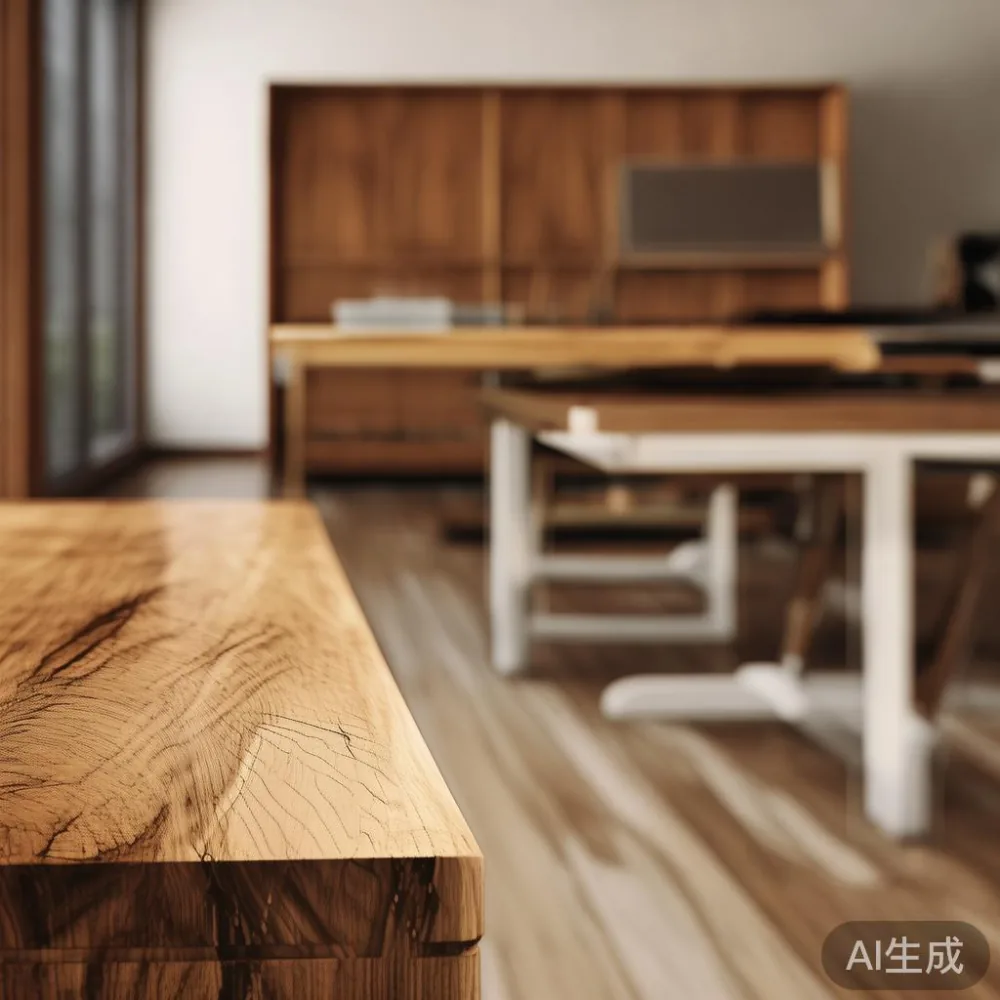
Both veneer and solid wood furniture can sit on the same shop floor. Both can look polished in the showroom. Over five years, though, the bills tell different stories, especially when you factor in Singapore's lift constraints, GST, humidity, and the realities of resale at the end of a lease. Below is a head-to-head, written from a furniture specialist's viewpoint and benchmarked against the kind of pieces you can actually buy on a budget under S$1000.
Why does this comparison matter for Singapore buyers specifically?
Singapore homes are humid (year-round 70 to 85 percent relative humidity), often narrow-corridor HDB or condo units in Tampines, Bedok, or Punggol, and most families buy with a five-year horizon in mind before the next renovation or relocation. The lift opening in a typical HDB block measures around 210 cm tall by 110 cm wide, while a king mattress rotated sideways can already eat 200 cm of that. That is why a solid wood dining table at 140 cm x 80 cm, or a French solid wood marble top coffee table at 120 cm x 60 cm, has to be planned as a long-term buy, not a one-season decoration.
Add 9 percent GST to almost every furniture invoice in 2026, and the difference between a S$799 veneer console and a S$1,050 solid oak console becomes S$22.41 per month over five years, before any repairs. That is a coffee a week, but the repairs are not a coffee a week.
What does "veneer" actually mean on a piece under S$1000?
Veneer furniture under S$1000 in Singapore is almost always one of three constructions: a 0.6 mm to 2 mm decorative wood layer glued onto engineered wood (MDF, particle board, or plywood), a paper-printed laminate printed to imitate walnut or oak, or a thin PVC wrap. The substrate is the weakness, not the surface. Once humidity crosses the 80 percent mark, which it does roughly 200 days a year in Singapore, the MDF core swells at the edges and the veneer lifts. A solid wood bed frame at 38 kg will survive that. A 28 kg veneer bed frame rarely will.
Industry testing commonly cited by Singapore casework suppliers puts MDF swelling at 8 to 12 percent in volume after 48 hours of 90 percent humidity exposure. Solid hardwoods such as rubberwood, ash, or oak move less than 1 percent in the same window. That single statistic explains most of the five-year damage I see on Tampines walk-up resale listings.
How do I choose a minimalist furniture for a study?
Pick a piece that keeps its shape and resale value after 60 months of Singapore humidity: choose solid wood with a clear 10-year structural warranty, simple lines (a 120 cm x 55 cm desk, a 90 cm bookcase, a 45 cm nightstand), and a finish you can refinish rather than replace. That is the whole rule, condensed.
Now the long version. For a study inside a typical 12 sqm HDB room, I want three things visible: the desk, one bookcase, and one nightstand or side cabinet. A minimal solid wood desk at 120 cm x 55 cm x 75 cm, made of ash or rubberwood, weighs between 22 kg and 28 kg. That weight tells you the timber is real. A matching 90 cm three-shelf bookcase in solid pine lands between 14 kg and 18 kg. A 45 cm nightstand should still come in at 8 to 10 kg. Anything lighter is hollow. A piece like MIDHILL's light-luxury post-modern desk and nightstand pairing keeps the visual weight low while the actual timber weight stays honest, which is why the budget-under-S$1000 framing matters: at this price you can still afford real wood if you skip drawers with metal runners and stick to two or three core pieces.
The real five-year cost: a side-by-side in Singapore dollars
I built a small comparison using pieces available in the Singapore retail market, all under S$1,000 per item, all sold through shops that deliver to HDB and condos with GST included. Each line assumes one purchase, one delivery, normal household use, and one move at the end of year three.
Veneer dining table set, 4-seater, 120 cm x 70 cm: purchase price S$689, delivery S$45, GST S$66.06, total S$800.06. Year two: edge peeling repair S$80. Year three: move damage, leg snapped, replaced at S$550 (similar new piece). Year five: not resellable. Total five-year cost: S$1,430.
Solid wood dining table, 4-seater, 120 x 70 cm, rubberwood or ash: purchase price S$899, delivery S$60, GST S$86.49, total S$1,045.49. Year two: light sanding and re-oil, do-it-yourself, S$25. Year three: move, zero damage because the 32 kg frame holds together. Year five: resell at 35 to 45 percent of original on Carousell. Net five-year cost: S$660 to S$735, before counting refinishing.
Veneer queen bed frame with storage, 160 cm x 200 cm: purchase S$749, delivery S$70 (often requires two men because of the 65 kg weight plus awkward shape, sometimes extra S$30 for non-lift landings), GST S$73.71, total S$892.71. Year three: hydraulic gas lift fails or headboard veneer chips, S$220 repair. Year five: written off. Five-year cost: S$1,112.
Solid wood queen bed frame, French light luxury style, 160 x 200 cm: purchase S$1,099 (just over the budget-under-S$1000 line, but a frequent promo price in Singapore), delivery S$70, GST S$105.21, total S$1,274.21. Year two: tighten four bolts, free. Year five: resell at 40 percent, S$440. Net five-year cost: S$834.
Veneer wardrobe, 180 cm x 60 cm x 50 cm, three doors: purchase S$850, delivery S$80, GST S$83.79, total S$1,013.79. Year three: door sag, hinge replacement, S$160. Year five: particleboard shelves bowing, replaced at S$600. Five-year cost: S$1,773.
Solid wood wardrobe, 180 x 60 x 50 cm: purchase S$1,199 (again, a mid-line pricing in Singapore), delivery S$80, GST S$115.11, total S$1,394.11. Year five: resell at S$480, no structural repair needed. Net: S$914.
Add those four pieces together. The all-vener household finishes at roughly S$5,128 over five years. The mixed solid-wood household, with two items stretching slightly above S$1,000 to keep honest timber, lands at roughly S$3,150 after resale. That is a S$1,978 swing on the same four pieces, in the same flat, with the same family.
What about marble table tops and sofa frames under the same budget?
The same rule applies, just with a twist. A French solid wood marble top coffee table at 110 cm x 60 cm, with a real 1.8 cm Carrara or Nero Marquina slab, weighs 32 to 38 kg. A "marble-look" sintered or porcelain table at the same size weighs 18 to 22 kg and costs S$200 to S$400 less. Over five years, the marble top can be re-polished locally for around S$120 to S$180 if it dulls or etches. The sintered surface cannot be repaired, only replaced. The base, however, must be solid wood. A hollow MDF base under a 28 kg marble top will crack the slab from below within 18 months. When you are buying on a budget under S$1000, prioritise a smaller genuine marble top (90 cm x 50 cm) on a solid wood base, rather than a big slab on a cheap frame.
For sofas, the comparison shifts to the frame. A solid wood sofa with a kiln-dried oak or ash frame, eight-way hand-tied springs or zigzag steel, and a high-resilience foam at 32 to 35 kg per cubic metre will keep its shape for 8 to 12 years. A plywood-frame sofa at the same price point often shows frame sag at year three, which is unrepairable without re-upholstery at S$600 to S$900. MIDHILL's solid wood sofa line, built in the post-modern light luxury register with low arms and slim oak legs, sits exactly in this comparison: a higher upfront number, but a five-year cost per year of ownership that is usually 30 to 40 percent lower than its veneer-cored rivals once you add repairs and replacement.
What should a Singapore buyer actually check in the showroom or on the website?
Five quick checks, all doable in under four minutes. First, weigh the piece. A 120 cm dining table under 18 kg is hollow. A solid wood nightstand under 6 kg is hollow. Second, look at the back and inside of doors. Real wood has end-grain and continuous grain patterns; veneer repeats every 60 to 80 cm. Third, ask for the warranty in writing. A 10-year structural warranty is the industry marker for serious solid wood makers. One-year warranties are almost always on engineered cores. Fourth, ask whether the surface can be sanded and refinished. If the answer is no, it is not solid wood through-and-through. Fifth, check the delivery terms: free delivery above a clear threshold, lift-level drop-off included, and a stated return window of 14 days are all signs the supplier expects the furniture to arrive in good condition and survive the first month without drama.
For HDB corridors in blocks such as those along Tampines Street 42 or Bedok Reservoir Road, the corridor outside the lift is typically 1.2 m to 1.5 m wide. A solid wood wardrobe 180 cm tall can usually be tilted and moved in one piece. A flat-pack MDF wardrobe of the same size can be brought in flat, which sounds easier, but its 18 mm particleboard shelves crack under that lateral stress within a year or two of normal use.
So is solid wood always the right answer on a budget under S$1000?
Not always, and honesty matters. A cheap bedside table used as a temporary piece in a rental room for 12 to 18 months, a foldable study desk for a child's first year, or a side table in a dry balcony can all be veneer without regret. The case for solid wood gets stronger the longer you plan to keep the piece, the heavier the load it carries (wardrobes, beds, dining tables), and the more exposed the surface is to sunlight and humidity. Pieces under S$300 are usually the right place to stay flexible and choose veneer, because at that price point the solid wood options have to compromise on thickness or joinery. Pieces between S$400 and S$1,000 are the sweet spot for solid wood: nightstands, sideboards, dining tables for four, single beds, and study desks all sit comfortably in that range.
The five-year math keeps coming back to the same place. A S$799 veneer wardrobe that needs S$760 of repair and replacement by year five costs more than a S$1,199 solid wood wardrobe that resells for S$480 in the same window. The bigger upfront number is not always the bigger five-year number. For Singapore homes, where humidity, GST, and lift logistics all add real cost, solid wood usually wins the five-year test for any piece that carries weight, holds clothes, or anchors a room. That is the comparison my friend in Punggol wished she had seen before she carried her cracked S$689 table down three flights of stairs last weekend.